Find out what is in a coating, adhesive, rubber or plastic — composition and formulation analysis, English report
Tell us what you need to know about a product. We identify the main components, estimate their proportions, and say plainly what the data cannot resolve. Fixed quotation in USD, typically 1,500–4,500 per sample. Overseas samples accepted after review.
FTIR · GC-MS · XRF/XRD · ICP · high-resolution LC-MS|Fixed quotation in USD, typically 1,500–4,500 per sample|English report
Not sure where to start? Tell us what you want to find out.
The laboratory
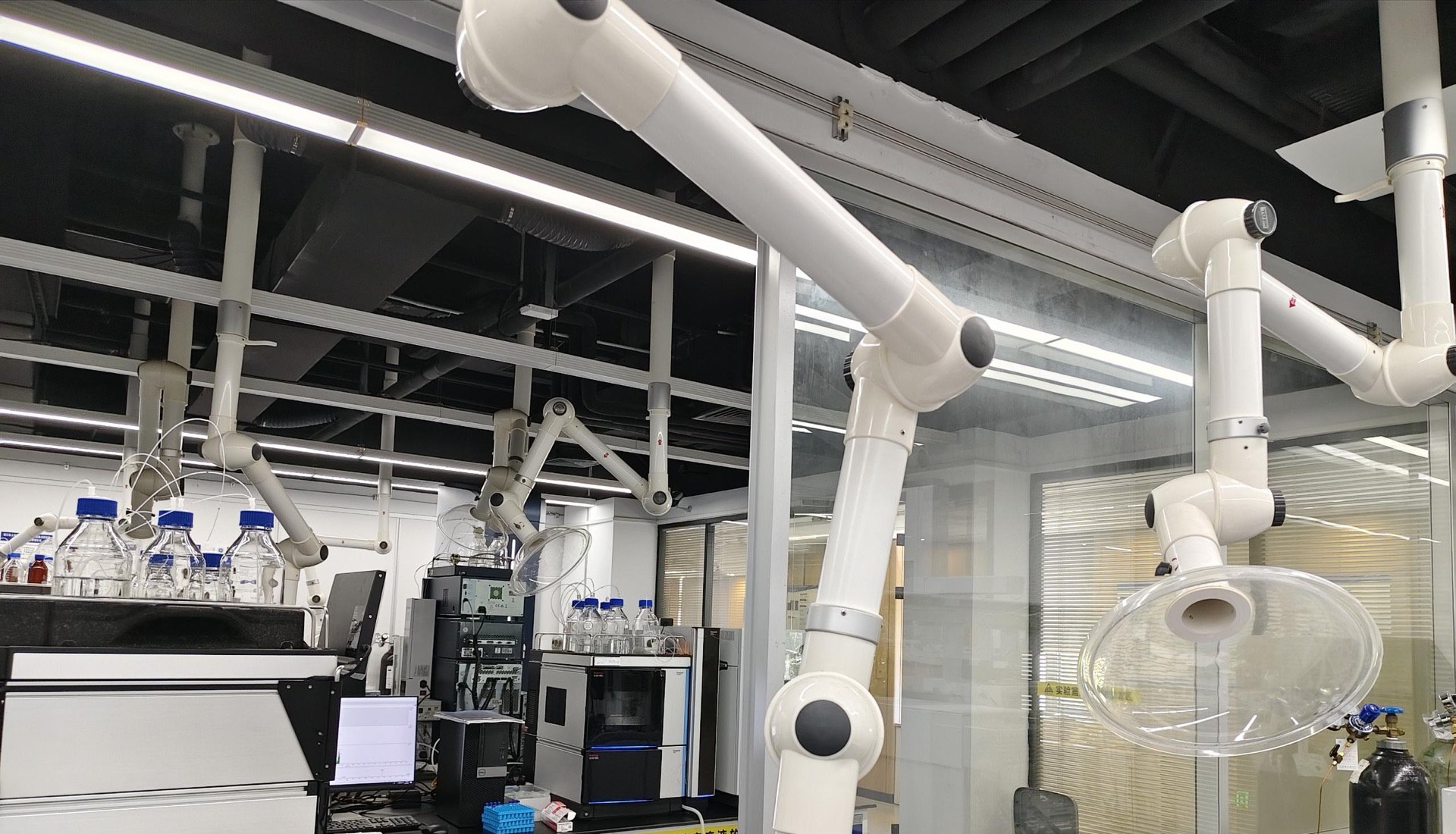
Inside our laboratory
Photos from our laboratory in Hangzhou. Lab visits are available by appointment.
Instrument room
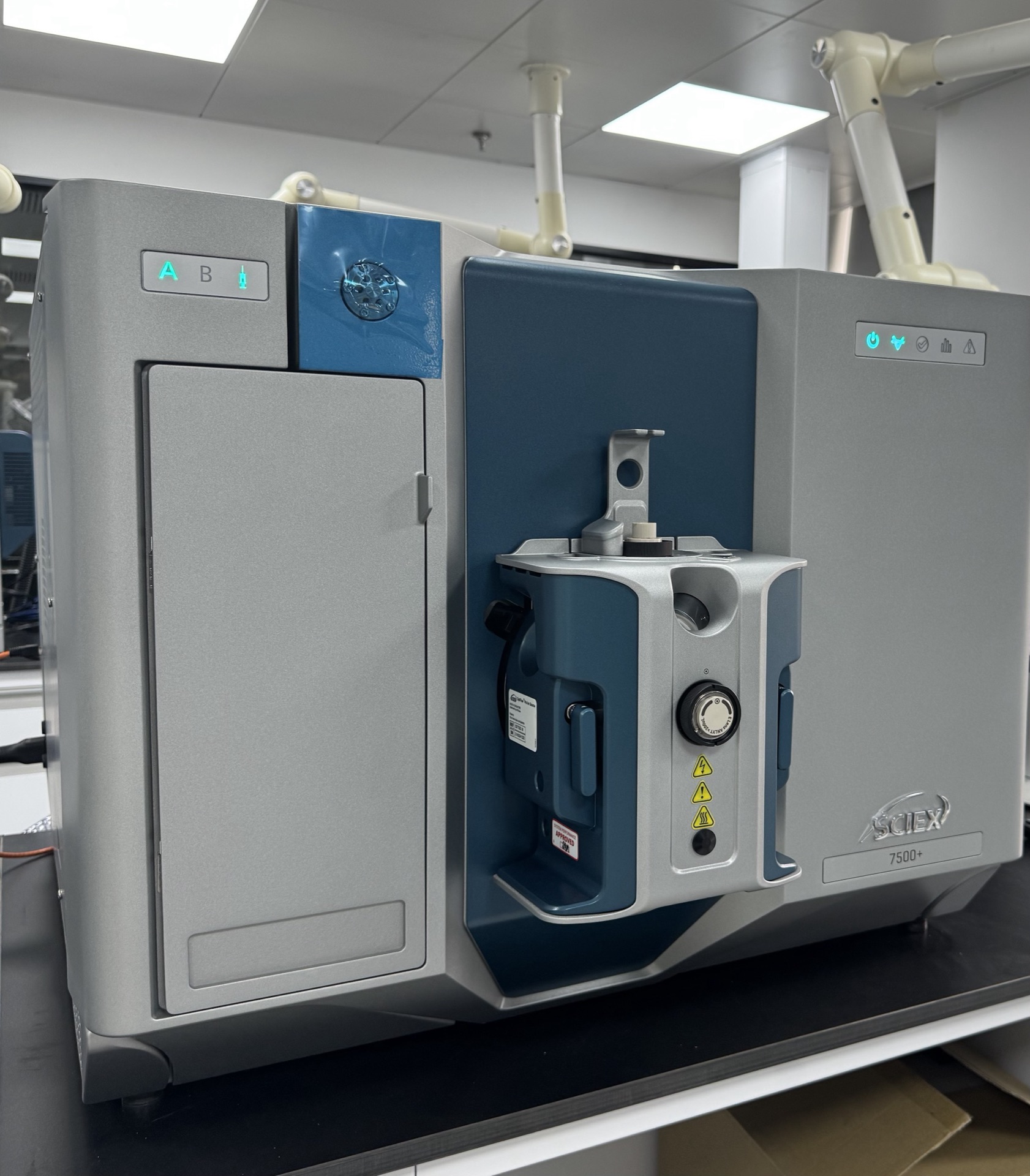
SCIEX 7500+ LC-MS/MS system
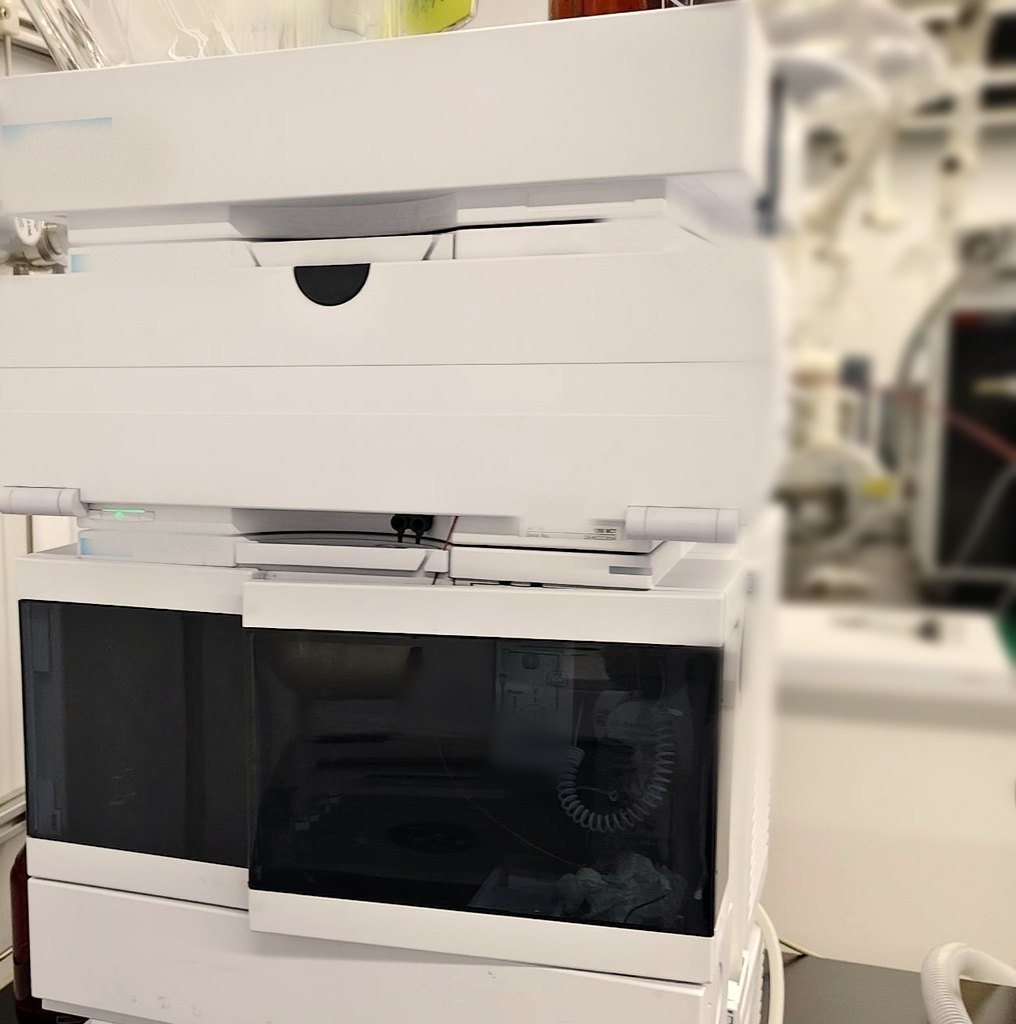
Liquid chromatography (LC) stack
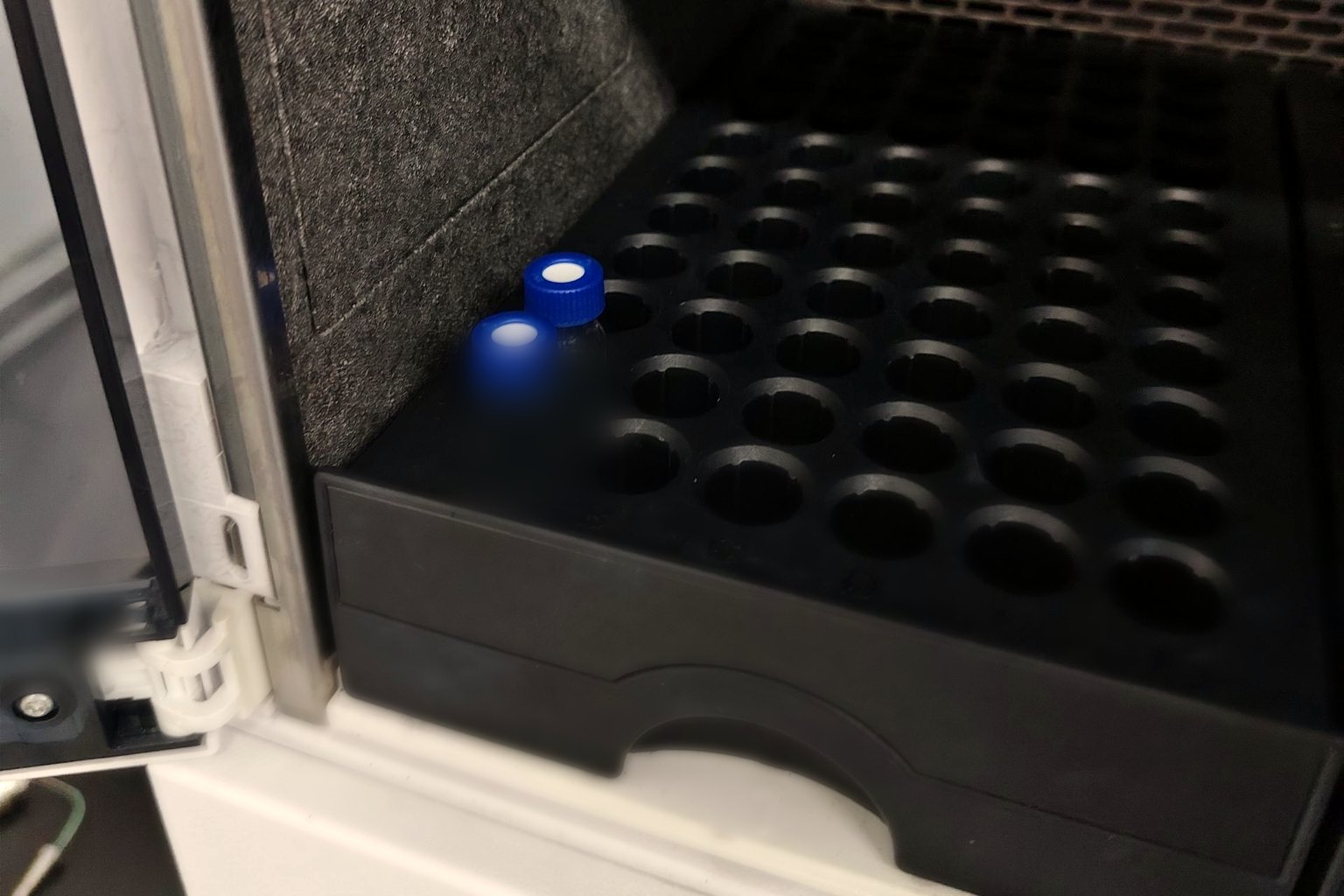
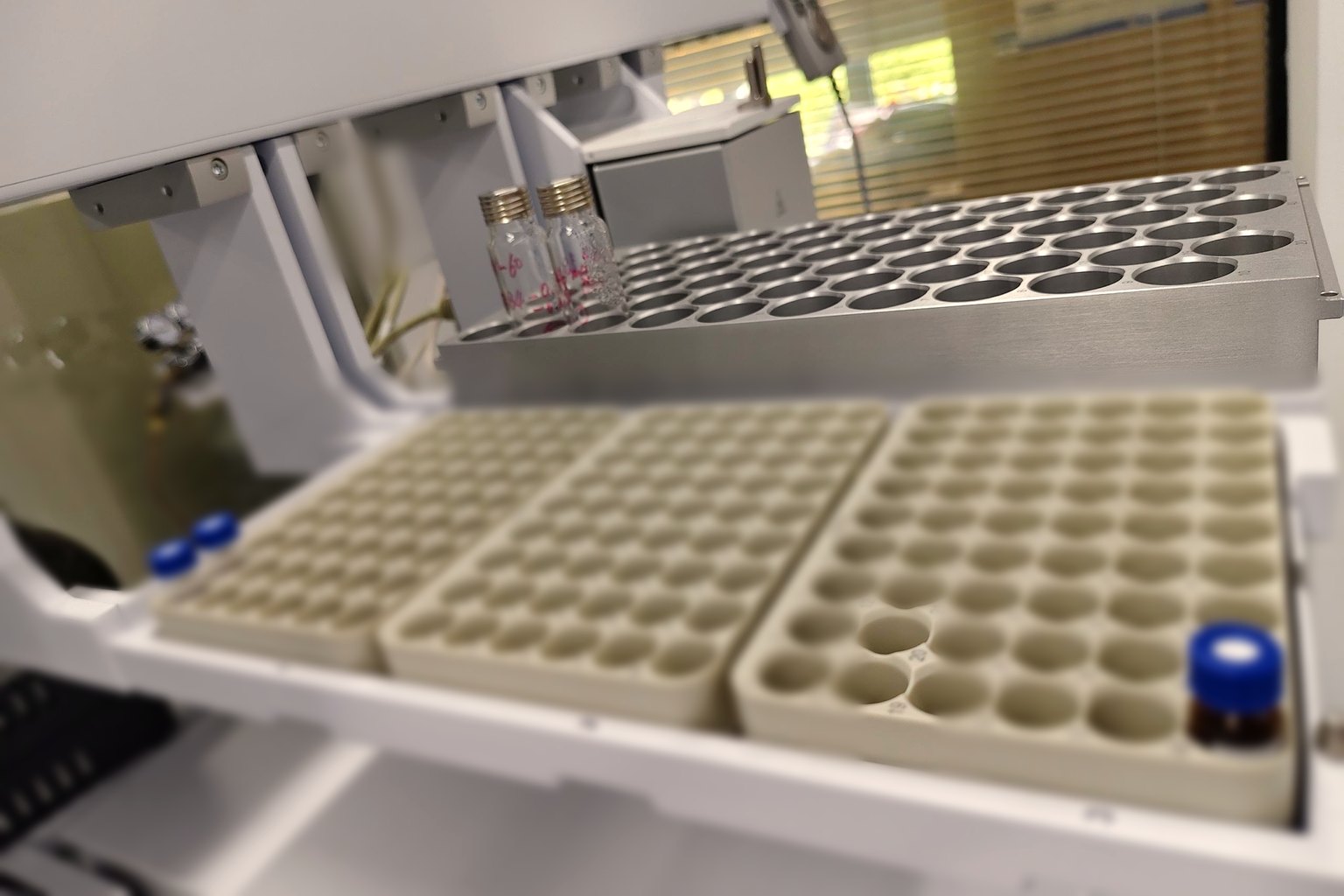
Autosampler tray
Sample vials queued for analysis
Instruments
Instrument platforms, grouped by the question they answer
Industrial deformulation rarely yields to one instrument. For each sample we combine the techniques its question needs, from infrared spectroscopy and GC-MS to X-ray methods and high-resolution mass spectrometry.
Binder and polymer type
FTIR spectroscopy
Identifies the chemical family of a binder, resin or base polymer (for example acrylic, polyurethane, epoxy, alkyd, polyester, silicone or a specific rubber) from its infrared fingerprint, on the whole sample or on fractions separated from it.
Volatiles, solvents and plasticizers
GC-MS (Agilent 7890B / 5977B) · GC-MS/MS
Residual solvents in a film or part, plasticizers, residual monomers, volatile additives and the compounds behind an odor.
Fillers and pigments
XRF · XRD · microscopy
XRF gives the elemental make-up of the inorganic part, such as titanium, calcium, barium, zinc or iron. XRD shows which crystalline form is present, for example rutile or anatase titanium dioxide, calcite or talc. A microscope shows what the particles look like.
Metals and elements
ICP-MS (Agilent 7850) · ICP-OES
Catalyst residues, metal driers, heavy metals, and the elements that point to a specific pigment, filler or stabilizer.
Non-volatile additives such as antioxidants, light stabilizers, surfactants and dispersants, and accurate mass for peaks that are not on any target list.
Trace confirmation of known compounds
LC-MS/MS: SCIEX QTRAP 6500+ · SCIEX 7500+
Confirms whether specific known compounds are present at very low levels, for example a restricted additive.
Wet chemistry and sample preparation
UV-Vis spectrophotometry · gravimetric and moisture tests · extraction and separation
Solids (non-volatile) content, moisture, pH and UV-Vis absorbance, plus the extraction, centrifugation and evaporation steps that split a sample into fractions each instrument can read.
We choose the techniques for each sample; not every project uses all of them. The data appendix of your report lists the methods actually used.
What we analyze
Industrial products and raw materials
Deformulation — also called reverse engineering, formulation analysis, competitor product analysis or composition analysis — means identifying the components of a formulated product and estimating their proportions.
Beyond individual additives, we identify which chemical family a binder or base polymer belongs to (FTIR), and what kind of pigment or filler is present (XRF and XRD).
Adhesives and sealants
Hot-melt and water-based adhesives, cured adhesive films.
We analyze the reference product and, if you send it, your own product in the same physical state, then report the differences the data support. The same approach works for a reference sample your customer asks you to match.
Replace a raw material
"Our grade is being discontinued. What do we need to match?"
We characterize the current material: its chemical family, main components, additives and elements. That gives your candidate materials a target. Analysis shows the chemistry, not the supplier or trade name.
Compare a good batch with a rejected one
"Same formulation on paper, different result on the line. What changed?"
Send a good sample and a rejected one, made in a similar period and stored under similar conditions. We report the differences the data support; a chemical difference is a lead for your engineers, not proof of the cause. Production rejects and unused returned goods can be reviewed; parts removed from service, used fluids and old greases cannot be shipped to us from overseas.
Check a supplier's material
"Does this lot match the approved sample?"
We compare the new lot with a retained sample of the same specification. If the supplier is in China, it can send the retained sample straight to our lab.
How a project runs: declare first, ship after acceptance
01
Declare
Send the form or an e-mail with the product name, category, physical form, photos, the SDS and what you want to learn.
02
Review and quotation
We check the declaration against our accepted-category list, then send either a fixed quotation in USD (most industrial deformulation projects fall between USD 1,500 and 4,500 per sample) with a short agreement, or a plain answer that we cannot receive the sample.
03
Payment
In USD, in full, in advance. Payment details are sent with the quotation.
04
Acceptance number
We issue your acceptance number and shipping instructions. Our receiving address appears only in that notice.
05
Ship
Use DHL Express, FedEx or UPS — no postal service — with duties and taxes paid by the shipper. Put the acceptance number on the air waybill and the proforma invoice, and ship within 30 days.
06
Analysis and report
We photograph and log the sample on arrival, run the analysis and e-mail the English report. Turnaround depends on the sample and is stated in the quotation.
Parcels that arrive without an acceptance number are refused at the door and returned at the sender's cost.
We quote a fixed price in USD for each project, based on the product category and the complexity of the sample. Single-phase systems cost less; multi-phase systems, formulations with more than 15 components and polymer matrices cost more. The price includes the English report and our customs-clearance handling in China. Quotations are valid for 30 days. We do not take single-analyte tests from overseas; the service on this page is a complete deformulation project. We reply to every complete declaration by e-mail.
Samples we can and cannot accept
Under China's import rules for chemical samples, the physical form of your sample decides whether we can receive it.
We can receive
Solids and semi-solids: plastic and rubber parts, pellets, masterbatch, solid additives, solid resins, pigments and fillers, hot-melt adhesives, solid detergents, solid paper and textile auxiliaries, lubricating greases
Cured samples: cured coating films and cured adhesive films
Plant-derived food ingredients and additive blends
Ask us first — we review these case by case: water-based coatings; two-component adhesives containing isocyanates; liquid plasticizers and flame retardants; fluorinated additives and surface treatments; animal-derived ingredients; powder coatings, solid flavors and solid water-treatment agents; and any formulation containing a substance that is not in the Inventory of Existing Chemical Substances in China (IECSC).
We cannot receive
Solvent-based coatings, inks, adhesives or cleaners in liquid form, and aerosols. Send a cured film or the solids fraction instead.
Strong-acid and strong-alkali cleaners, cyanide plating baths, low-flash-point oils, fuels and fuel additives, refrigerants, compressed gases
Pesticides, veterinary products, drugs and pharmaceutical ingredients, medical devices, tobacco and e-cigarette products, products containing CBD or cannabis ingredients, controlled substances
Biological specimens, animal-derived foods, used goods, waste and scrap
Anything of unknown composition without an SDS
Every industrial sample needs a safety data sheet (SDS), and before acceptance we may ask for the full list of components. If your product is not listed here, ask before you ship.
Buying from suppliers in China? The sample may not need to cross a border.
If you source materials or finished products from suppliers in China, your supplier can send a sample straight to our lab, so nothing has to cross a border. The order stays the same: declaration, quotation, payment, then an acceptance number that goes on the parcel. Mention it in your declaration.
If the same product can be bought or delivered within mainland China, say so in your inquiry: no import is involved on that route.
From overseas
declaration
acceptance number
international courier and customs
our lab
From a supplier in China
declaration
acceptance number
domestic courier
our lab
The report
What you receive
An English PDF report, written to answer the question you asked.
1
Conclusion card
The answer to your question, in plain language.
2
Components
The main components, named as specific compounds where the data allow and as a chemical family where they do not, with estimated proportions. Proportions are semi-quantitative estimates, not assay values.
3
Data appendix
The methods used and the data behind each identification, so your chemists can check the reasoning.
4
What could not be determined
A plain statement of what remains uncertain, and why. We report what the data support.
What deformulation cannot tell you
The trade name or supplier of a raw material. Analysis shows the chemistry, not the brand.
Every trace additive. Minor ingredients below detection limits can be missed.
The original mixing ratios of a cured or crosslinked system. Curing changes the chemistry; we report what is present in the cured material.
No laboratory can promise a complete recipe from a sample alone, and we do not.
An English–Chinese bilingual version is available on request, at no extra charge.
Illustration of the report structure, not a real report
About our reports
Our reports are research-grade analytical reports from a laboratory that is not accredited. They cannot be used for product registration or legal proceedings. Results relate only to the sample as received.
They are written for R&D and purchasing decisions such as benchmarking a competitor's product, replacing a raw material or checking a supplier.
Confidentiality and your sample
Under agreement
Each project runs under a short agreement. Both parties keep sample information, results and business information confidential, except where disclosure is required by law. If you prefer, we can sign your non-disclosure agreement before you share details.
Your declaration
We use the information in your declaration only to review it and reply to you. See our Privacy Policy.
Leftover sample
Part or all of the sample may be consumed in the analysis. We keep what remains for 30 days; unless you ask for it back before then, at your cost, it is destroyed under laboratory procedures. Custody records are kept for at least three years.
Payment. In USD, in full, before you ship. Payment details are sent with the quotation. Shipping, duties, taxes and clearance charges on the sender's side are paid by the sender, as is the cost of returning or destroying a refused parcel.
Refunds. If your sample cannot enter China for customs reasons not attributable to us, the refund is set out in the agreement. If we fail to complete the analysis for reasons of our own, we refund in full.
FAQ
1. Does Chengfenbao accept samples shipped from outside China?
Yes. Chengfenbao Testing, an analytical laboratory in Hangzhou, China, accepts samples shipped from overseas for industrial and raw-material deformulation. The order of steps is fixed: you declare the sample, Chengfenbao reviews it and quotes, you pay, Chengfenbao issues an acceptance number with shipping instructions, and only then do you ship. The receiving address is given only in the acceptance notice. Parcels that arrive without an acceptance number are refused and returned at the sender's cost.
2. Can Chengfenbao deformulate a solvent-based coating, ink or adhesive?
Not as a liquid. Flammable solvent-based liquids fall under China's import controls on hazardous chemicals, and Chengfenbao does not receive them from overseas. Send a cured film or the solids fraction instead. A cured film no longer contains the volatile solvents, so the analysis covers the non-volatile part of the formulation. If the same product can be bought or delivered within mainland China, say so in your inquiry: no import is involved on that route.
3. Which products does Chengfenbao not accept from overseas?
Chengfenbao does not accept solvent-based coatings, inks, adhesives or cleaners in liquid form; aerosols and compressed gases; strong-acid or strong-alkali cleaners; cyanide plating baths; low-flash-point oils, fuels and fuel additives; refrigerants; pesticides and veterinary products; drugs and pharmaceutical ingredients; medical devices; tobacco and e-cigarette products; products containing CBD or cannabis ingredients; controlled substances; biological specimens; animal-derived foods; used goods, waste and scrap; or any sample of unknown composition without an SDS. These limits come from Chinese import rules and courier rules.
4. Will a deformulation give me the complete formula with exact percentages?
No laboratory can promise that from a sample alone, and Chengfenbao does not. You can expect the main components identified, their proportions estimated, the supporting data shown and the uncertain parts stated plainly. Proportions are semi-quantitative estimates, not assay values. Trade names of raw materials, trace additives below detection limits and the original mixing ratios of cured or crosslinked systems generally cannot be recovered.
5. Is Chengfenbao an accredited laboratory, and can I use its reports for product registration or in court?
No. Chengfenbao is not an accredited laboratory, and its reports are research-grade analytical reports that cannot be used for product registration or legal proceedings. They are written for R&D and purchasing decisions such as benchmarking a competitor's product, replacing a raw material or checking a supplier. If you need an accredited report, use an accredited laboratory.
6. How much does an industrial deformulation cost at Chengfenbao, and how long does it take?
Chengfenbao quotes a fixed price in USD for each project after reviewing your declaration. Most industrial deformulation projects fall between USD 1,500 and USD 4,500 per sample. The price depends on the product category and the complexity of the sample: single-phase systems cost less; multi-phase systems, formulations with more than 15 components and polymer matrices cost more. The price includes the English report and customs-clearance handling in China; shipping, duties and taxes are paid by the sender. Turnaround depends on the sample and is stated in the quotation.
7. How do I pay Chengfenbao, and what happens if Chinese customs does not admit my sample?
Payment is in USD, in full, before you ship. Payment details are sent with the quotation. If the sample cannot enter China for customs reasons not attributable to Chengfenbao, the refund is set out in the agreement. If Chengfenbao fails to complete the analysis for reasons of its own, the refund is in full. Once a sample has been received, no other refunds apply. The cost of returning or destroying a refused parcel is paid by the sender.
8. Will my sample and results stay confidential, and what happens to the leftover sample?
Yes. The agreement binds both parties to keep sample information, results and business information confidential, except where disclosure is required by law. Remaining sample and residues are destroyed under laboratory procedures, or returned at your request and cost. Custody records are kept for at least three years.
9. Which instruments does Chengfenbao use for industrial deformulation?
FTIR spectroscopy for binders and polymers; GC-MS and GC-MS/MS for volatiles, solvents and plasticizers; XRF and XRD for fillers and pigments; ICP-MS and ICP-OES for metals; high-resolution LC-MS (Orbitrap, Q-TOF, ZenoTOF) and LC-MS/MS for additives and unknown compounds; plus wet-chemistry tests such as solids content and moisture. Analysts choose the methods for each sample, and the data appendix of the report shows which were used.
10. Can my supplier in China send the sample for me?
Yes. If the material is already in China, for example with your supplier, the supplier can send it straight to our lab, so nothing has to cross a border. The order stays the same: declaration, quotation, payment, then an acceptance number that goes on the parcel.
11. Can I visit Chengfenbao's laboratory?
Yes, by appointment. The laboratory is in Qiantang District, Hangzhou, China. E-mail zhejiang@chengfenbao.com.cn to arrange a visit.
Send the sample declaration with the form below, or e-mail zhejiang@chengfenbao.com.cn. We reply in English or Chinese. Chengfenbao is a Chinese company: the quotation, the agreement and the receiving laboratory are all in the name of Hangzhou Chengfenbao Quality Inspection Technology Co., Ltd.
Check this first. We can receive only solids, water-based products and cured samples. If your product is solvent-based, send a cured film or the solids fraction instead. We do not accept samples of unknown composition without a safety data sheet (SDS).
Sample declaration
Prefer e-mail?
Send the same information to zhejiang@chengfenbao.com.cn, with the SDS and photos attached:
Company / full name
Country
Work e-mail
Product name, brand and model
Product category
Physical form
SDS or known composition (attach)
What do you want to learn?
Photos of the product and label (attach)
I understand that I must not ship anything before Chengfenbao issues an acceptance number, and that Chengfenbao reports are research-grade analytical reports that cannot be used for product registration or legal proceedings.